CCU24 - GSM-R Gateway TRS-G2
The TRS-G2 is a next-generation FRMCS/GSM-R train radio system engineered in full alignment with the latest FRMCS architecture. It provides maximum flexibility, seamless migration from GSM-R to FRMCS, and long-term investment protection. The Central Control Unit CCU24 serves as the communication gateway to the GSM-R network, enabling a smooth transition towards future FRMCS-based railway communications.
Download
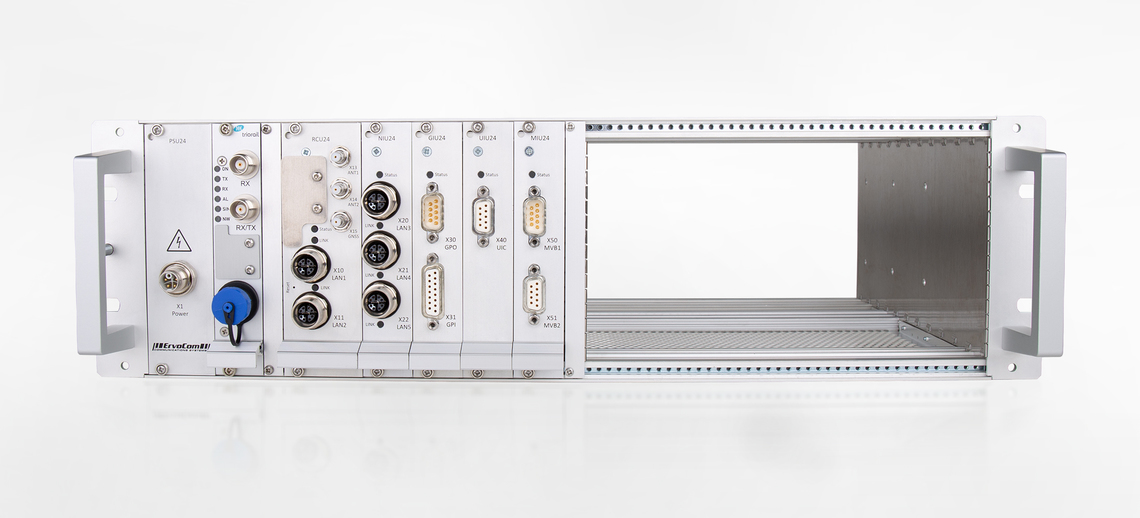
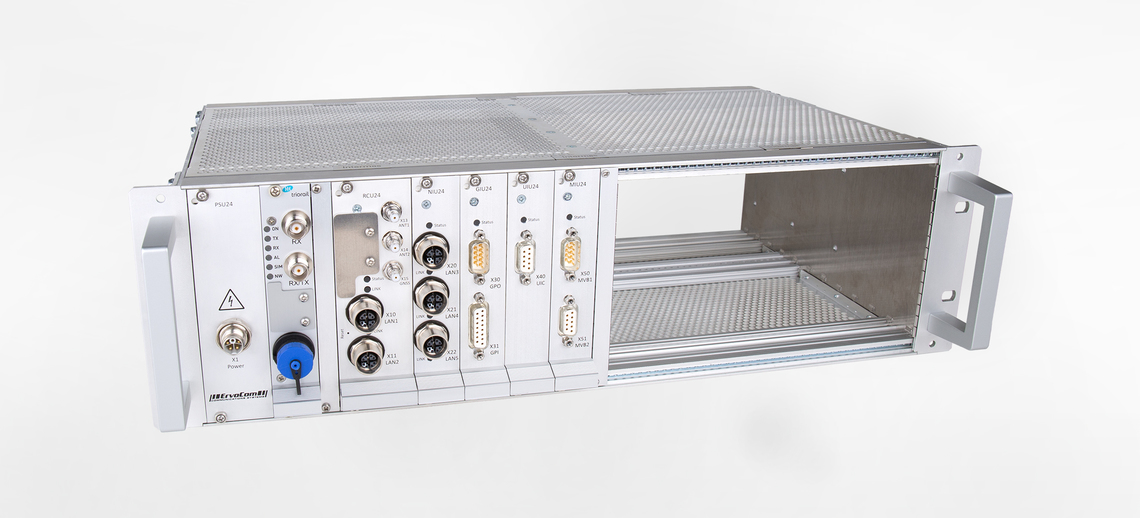
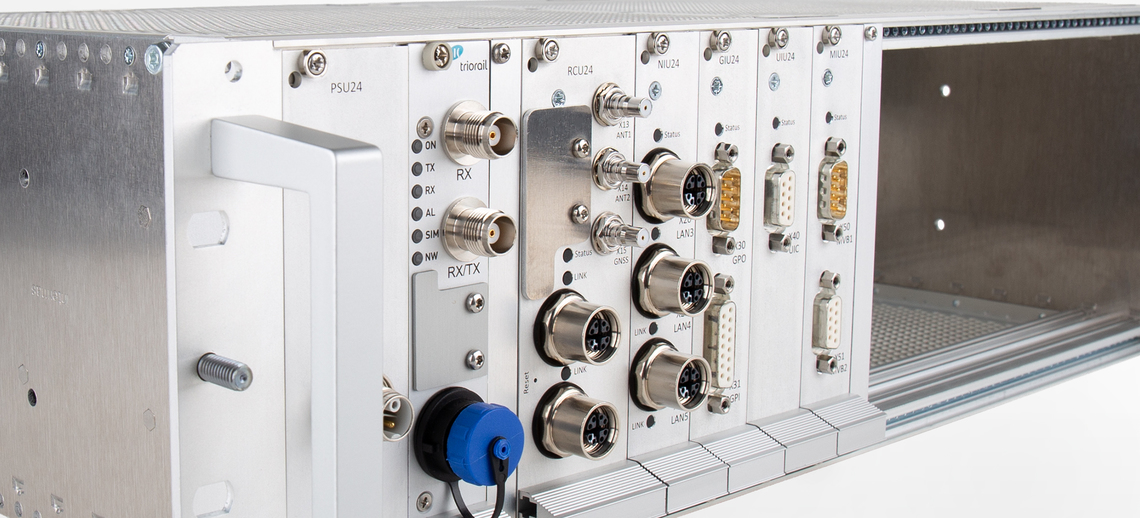
The TRS-G2, consisting of the HMI COCO24 and the Central Control Unit CCU24, is a next-generation FRMCS/GSM-R Dual-Mode Cab Radio that supports voice communication over both GSM-R and FRMCS. Developed in accordance with the latest FRMCS architecture, ErvoCom has consistently implemented a fully Ethernet-based system architecture, ensuring maximum flexibility, scalability, and future readiness.
The COCO24 integrates both the FRMCS Voice Application Subsystem (VAS) and the GSM-R voice application, allowing seamless operation across both communication networks from a single intuitive user interface. Standardized OBAPP and OBRAD APIs ensure vendor-independent interoperability with FRMCS Gateways and FRMCS Radios, enabling operators to implement true multi-vendor strategies, simplify future system upgrades, and significantly reduce lifecycle costs.
Connectivity to existing GSM-R infrastructure is provided by the CCU24, which communicates with the COCO24 via Ethernet. In addition to the integrated GSM-R gateway, the CCU24 offers a range of optional interface modules, including GPIO, UIC 3/4 and MVB, enabling seamless integration into both new and existing vehicle platforms. A built-in 5G modem also supports MCx services and Voice over LTE (VoLTE), providing reliable voice communication via public mobile networks whenever required.
Designed for both new-build vehicles and retrofit applications, the TRS-G2 enables operators to equip today's fleets with GSM-R while ensuring a smooth and cost-effective migration to FRMCS in the future. Thanks to its open, Ethernet-based architecture and support for legacy vehicle interfaces, the platform minimizes integration effort, reduces technical risks, and provides maximum flexibility together with long-term investment protection throughout the entire migration journey.
Contact
Advantages
- Maximum investment protection through a future-proof FRMCS-compliant architecture
- Simple and cost-effective migration from GSM-R to FRMCS
- Reduced lifecycle costs through an open, modular platform
- Minimal integration effort for both new-build and retrofit vehicles
- Broad vehicle interface support, including GPIO, UIC 3/4, MVB and Ethernet
- Open multi-vendor architecture with standardized FRMCS APIs (OBAPP/OBRAD)
- TSI CCS compliant and certified to leading railway standards, including EN 50155, etc.
- Long-term flexibility and scalability for evolving railway communication requirements



References
Currently there are no references available.